
Top Adventure / Dual‑Sport Helmets Budget to Premium 2026
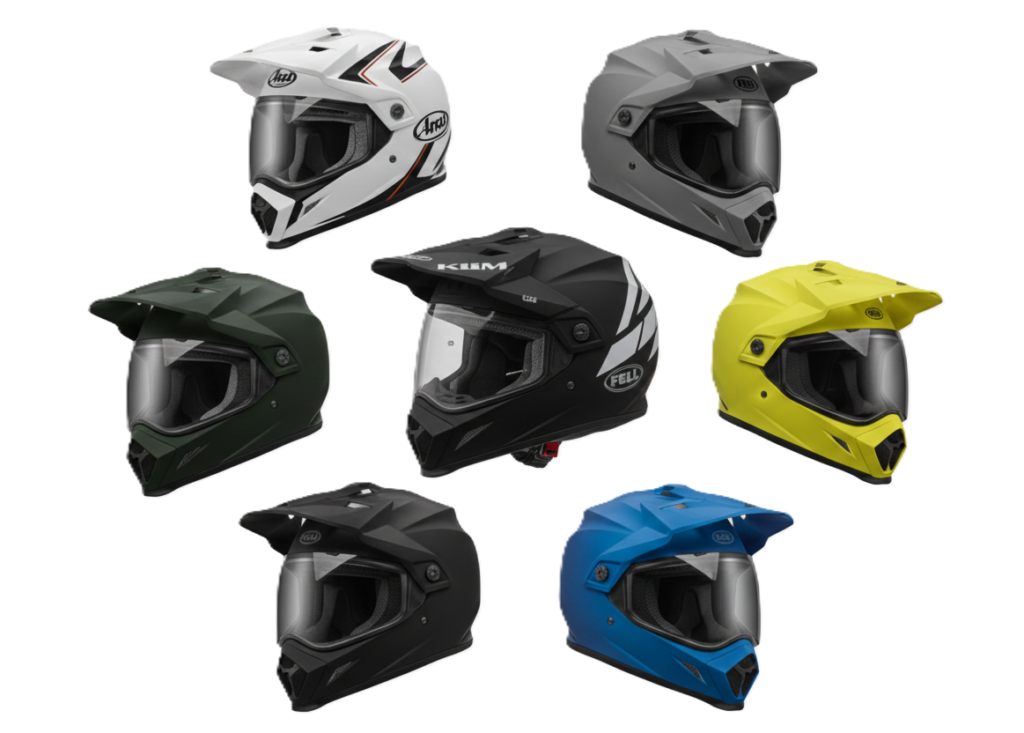
Budget & Entry-Level Helmets ($50 – $150)
-
O’Neal Sierra Helmet— Good value for the money. The helmet uses a polycarbonate/ABS shell and meets both DOT. It comes with an integrated full-face shield plus a drop-down sun visor, making it useful whether you’re riding at night, in bright daylight, or transitioning between on-road and off-road. (Check It Out)
- Fly Racing Kryptek Helmet — one of Fly Racing’s more popular dual‑sport / adventure‑style helmets — is a good example to add. It’s light, ventilated, and relatively affordable. (Check It Out)
-
Bell MX-9 MIPS Helmet — widely considered one of the best “value” helmets (~$110–$170 depending on vendor). Lightweight, DOT/ECE certified, with good ventilation. A solid entry‑to‑mid‑range choice for dual‑sport riders, especially if you’re budget‑conscious but want a reliable lid. (Check It Out)
-
ILM Dual Sport Adventure Motorcycle Helmet WS902 — another budget‑to‑mid‑range helmet (~$150) with DOT certification, decent comfort and protection for light to moderate dual‑sport/touring use. (Check It Out)
-
LS2 Rebellion Helmet — usually under $150, it balances affordability with useful features like ventilation and a twin‑shield / drop-down visor system. Good for riders who want basic adventure‑ready gear without breaking the bank. (Check It Out)
Good for: Beginners, riders on a tight budget, backup helmets, light/dirt‑light riding, commuting + occasional off‑road.
Tradeoffs: Lower-end helmets tend to be heavier per unit protection, less refined comfort/ventilation, and fewer advanced safety features.
Mid‑Range to Mid‑High Helmets ($200 – $350)
-
Scorpion EXO — offers a nice balance of durability, lighter weight, and good protection, with a fiberglass/aramid shell that’s a step up from basic polycarbonate. Good for mixed road/off-road riding and touring. (Check It Out)
-
Bell MX-9 Adventure MIPS Helmet — a higher-end variant of the MX‑9 series, with added versatility and good comfort for longer rides and mixed terrain. MIPS adds extra protection on impact. (Check It Out)
Good for: Regular dual‑sport or adventure-touring riders, mixed road/trail riding, riders wanting a balance of cost, comfort, and decent features.
Tradeoffs: While solid, they may still lack some premium build quality, noise dampening, or extreme comfort for extended touring vs high-end helmets.
Premium Helmets ( $500 – $800) — For Frequent, Long, or Serious Riding
-
SHOEI Hornet X2 Helmet — a top-tier helmet from one of the most trusted brands in adventure riding (price ~$700+). Excellent build quality, ventilation, and comfort for long-distance touring, on‑road and off‑road. DOT + SNELL + ECE certified — ideal for serious ADV riders. (Check It Out)
-
SHOEI Hornet X2 Invigorate Helmet — same high build quality and features as above, serving riders who demand top performance and durability for heavy use. (Check It Out)
-
KLIM Krios Pro Helmet — a top‑tier adventure‑ready lid with high-end construction, excellent comfort, and dual-sport versatility.” (Check It Out)
- Arai XD-5– True versatility for on-road, off-road, and adventure riding. You can configure the helmet three ways: with just the shield (street use), just the peak (goggles for off-road), or both for full ADV use. The shield/peak attach and detach without tools, so switching between setups is quick. (Check It Out)
Good for: Frequent adventure riders, long‑distance touring, mixed terrain riding (road + off-road), those valuing comfort, ventilation, safety, and build quality.
Tradeoffs: High cost, so if you ride occasionally or mostly on pavement, you might not get full value compared to mid‑range helmets.
What to Look for When Choosing a Helmet
-
-
Safety certification: DOT (minimum), ECE, or even SNELL — for more peace of mind. Premium helmets often carry DOT + SNELL + ECE.
-
Comfort & ventilation: Long adventure rides demand good airflow and padding; heavier helmets can tire your neck out.
-
Versatility / adaptability: Some helmets (especially modular or dual‑sport designs) allow you to ride dirt trails or highways with minimal modifications (visor vs goggles, peak/no‑peak, etc.).
-
Weight vs protection: Lighter shells reduce fatigue but must balance with protective capabilities; many mid to high‑end helmets manage this well.
-
Durability & longevity: Better shells and liners tend to last longer — premium helmets often justify their cost over time if you ride frequently.
-
Comments
Add a comment
400 DS/ADV Events & GPX Routes
“Click On The State You Want To Ride”

Dual Sport/Adventure Event Must Have's - USDualSports
December 7, 2025 at 11:14 am[…] [Link to Helmet Guide] […]